

Insufferable corporate narcissism has reached new heights
By Rebecca Webber published September 5, 2016 - last reviewed on December xv, 2017
Last winter, a friend told me she was considering a divorce. "I actually think my married man is a narcissist!" she said. More recently, over brunch, an acquaintance explained his family unit dynamics: "My aunt is such a narcissist, we're non sure why my uncle is with her."
The term narcissist has been widely deployed to draw not only a passel of difficult relatives and regretted exes, but also both nominees for president and the entire generation known as Millennials. Is narcissism really and then widespread or on the rise in the general population?
A growing consensus among psychologists says no, information technology isn't. Truthful pathological narcissism has always been rare and remains then: Information technology affects an estimated i percent of the population, and that prevalence hasn't changed demonstrably since clinicians started measuring it. Nigh (but not all) putative narcissists today are innocent victims of an overused characterization. They are normal individuals with healthy egos who may also happen to indulge in the occasional selfie and talk about their accomplishments. They may even be a bit vain. Only while we're diagnosing friends, relatives, and our kids' classmates, truthful pathological narcissists may exist evading detection because nigh of us don't understand the many forms the status may take.

Photo by Dean Alexander
What Narcissism Is (And Isn't)
Narcissism is a trait each of u.s. exhibits to a greater or bottom caste. Equally it has become trait non grata, though, it'southward become necessary to add the qualifier "good for you" to specify the socially acceptable blazon of narcissism. "Information technology is the capacity to see ourselves and others through rose-colored glasses," says psychologist Craig Malkin, a lecturer at Harvard Medical School and the writer of Rethinking Narcissism. That can be beneficial, because it'due south helpful for all of us to feel a scrap special. Information technology fuels the confidence that allows us to take risks, similar seeking a promotion or asking out an attractive stranger. Merely feeling besides special can cause bug.
The Egotistic Personality Inventory (NPI) is the most unremarkably used measure out of the trait. Developed by Robert Raskin and Calvin S. Hall in 1979, information technology asks an individual to choose between pairs of statements that assess levels of modesty, assertiveness, inclination to lead, and willingness to dispense others. Scores range from 0 to 40, with the boilerplate tending to autumn in the low to mid-teens, depending on the grouping being tested. Those whose score is a standard divergence higher up that of their peers could reasonably exist called narcissists. But a score anywhere along a wide range of the calibration might still signal a fundamentally healthy personality.
A diagnosis of pathological narcissism—which is a mental health disorder—involves different criteria. "Egotistic Personality Disorder is an extreme manifestation of the trait," says developmental psychologist Eddie Brummelman, a fellow at Stanford University. The disorder can be diagnosed only by a mental health professional person and is suspected when a person's narcissistic traits impair his or her daily functioning. The dysfunction might be related to identity or self-direction or cause friction in relationships due to problems with empathy and intimacy. It might likewise arise from pathological antagonism characterized by grandiosity and attention-seeking.
"Narcissism is a continuum, and the disorder sits at the very terminate," Brummelman says. The NPI can observe a person'southward level of narcissism, just boosted real-life effects are necessary for a diagnosis of NPD.
"A personality disorder is a pervasive disturbance in a person'southward ability to manage his or her emotions, hold onto a stable sense of cocky and identity, and maintain healthy relationships in work, friendship, and honey," Malkin says. "It's a affair of rigidity."
Someone who scores high on the NPI may indeed run across occasional bad-mannered or stressful social interactions, merely for someone with NPD, Malkin says, "all the psychological defenses are working confronting good for you functioning" all the time.
The Many Faces of Narcissism
Popular civilisation has long relied on narcissistic traits to sketch problematic characters in precipitous relief, from Dorian Gray to Don Draper. Gaston from Disney'southward Beauty and the Creature presents a dizzy but fairly apt model of grandiosity, probably the most recognizable feature of people high in narcissism and those with NPD. That brawny braggart sings, "Equally a specimen, yes, I'm intimidating!...As you see, I've got biceps to spare!...I'm especially skillful at expectorating!...And every last inch of me's covered in hair." Other narcissists may indeed perceive themselves every bit being in the peak .1 percent in terms of talent, appearance, success, or all of the above.
But it'due south a mistake to presume that all narcissists will be such obvious preeners. "Not all narcissists care most looks or fame or money," Malkin says. "If you focus also much on the stereotype, you'll miss red flags that have nothing to do with vanity or greed."
For example, he suggests, some narcissists tin can be of the "communal" multifariousness and actually devote their lives to helping others. They might fifty-fifty concord with such statements as "I'thou the most helpful person I know," or "I will be known for the good deeds I accept done." "Everyone has met grandiosely donating martyrs, self-sacrificing to the point where you tin can't stand to be in the room with them," Malkin says.
And there are highly introverted, or "vulnerable," narcissists. These individuals experience they are more temperamentally sensitive than others. They react poorly to even gentle criticism and demand constant reassurance. The way they feel special might actually exist negative: They may see themselves every bit the ugliest person at the political party or feel like a misunderstood genius in a globe that refuses to recognize their gifts.
What all subtypes of narcissist have in common, Malkin says, is "cocky-enhancement." Their thoughts, behaviors, and statements set up them apart from others, and this feeling of distinction soothes them, considering they're otherwise struggling with an unstable sense of self.
"Narcissists feel superior to others," Brummelman says, "but they are not necessarily satisfied with themselves as a person."
Photo past Dean Alexander
A Link to Depression
That struggle is at the core of a new conception of narcissism, one focused equally much on low every bit on grandiosity. "What people hypothesize is that narcissists are prone to college highs and lower lows," says Seth Rosenthal, a research specialist at Yale'southward Program on Climate Alter Communication, who did his doctoral research on narcissism. "They have this constant need to take their greatness verified by the earth around them. When reality catches up with them, they may react by becoming depressed."
When a clear setback, such every bit a task loss or divorce or even a plan being scuttled, dents the carefully burnished self-image of a egotistic private, "this is a real attack on who he is," says Steven Huprich, the president-elect of the International Social club for the Study of Personality Disorders and a professor at the University of Detroit Mercy. "Somebody he thought was going to trust him now very much dislikes him and is unwilling to put up with him anymore. Non surprisingly, he finds himself a little more than down and depressed."
Of course, even people with healthy mental states struggle to deal with such dramatic turnarounds, Huprich says, "only for narcissists and narcissistic personalities, loss is really very hard, because information technology suggests vulnerability and weakness. It suggests that you actually aren't immune to life'due south challenges and ups and downs."
The narcissist might also exhibit defensiveness and anger at such moments. "When they don't get the admiration they crave, they feel ashamed and lash out aggressively," Brummelman says. Others are unlikely to have the same sort of ambitious outbursts.
When a disappointment cuts through narcissists' thick layer of grandiosity and self-promotion and breaches their core, their resulting melancholy or boiling rage might motivate them to seek outside help. The Diagnostic and Statistical Manual of Mental Disorders (DSM-5), in fact, advises clinicians that individuals with NPD may present with a depressed mood. They rarely, however, come in seeking treatment for their narcissism. "I've never heard anyone say, 'I think I'grand a narcissistic personality,'" Huprich says.
That doesn't mean narcissists are oblivious to their trait. A 2011 study in the Journal of Personality and Social Psychology—titled, with a flash, "You lot Probably Think This Newspaper'south About You lot"—reported that narcissists did take insight into their personality: They described themselves equally arrogant and knew that others saw them less positively than they saw themselves. Only they generally didn't run into this equally a problem, and the contend continues over whether their grandiosity reflects an ironclad belief in their superiority or masks an underlying absence of self-conviction.
Over years of research, Huprich and colleagues have developed a concept that may be related to narcissism. They call it "malignant self-regard." It'due south a potential explanation for a constellation of non-quite clinically diagnosable personality disorders with overlapping features, including depressive, cocky-defeating, and masochistic personality styles.
Applied more widely to narcissistic subtypes, the theory suggests that deep-seated insecurity about the self and an exceedingly delicate sense of self-esteem can lead to maladaptive thoughts and behavior. Extraverted narcissists exhibit grandiose attention-seeking. Vulnerable narcissists, meanwhile, only succumb to their damaged self-image. "They're not able to keep a coherent sense of who they are, so when they are attacked, instead of fighting dorsum, which is the first reaction of the grandiose narcissist, they take an firsthand reaction of sadness and depletion and depression," Huprich says.
People may develop cancerous self-regard as children in the context of their relationships, Huprich proposes. These individuals may accept had inconsistent experiences with their parents, related in particular to how success and achievement were recognized. Parents might have refused to acknowledge achievements or discouraged bragging well-nigh them, taking abroad the rose-colored spectacles of healthy narcissism that could have eased the manner as a child encountered new challenges in life.
Photo by Dean Alexander
Are They Made or Born?
Childhood experiences may play a major role, only almost experts agree that both high levels of trait narcissism and NPD arise from the combined influences of nature and nurture that likely begin in the genes. "In that location are personality traits nosotros come up into the world with," says Kali Trzesniewski, a social-evolution psychologist at the University of California, Davis. Ane's environment can either weaken or strengthen those traits, "though there are always people who don't seem to react to their environment; they're merely kind of resilient to information technology."
I twin study found that narcissism was a highly heritable trait. It tin also manifest early on in life: Some other report found that dramatic, aggressive, attending-seeking preschoolers were more likely to end up as narcissistic adults. Just parenting styles, the influence of other relationships, and one's social and cultural environments tin encourage (or deter) its development.
Culture matters as well: Lifetime rates of NPD are most iv times higher in notoriously competitive New York when compared with Iowa. Simply beyond the globe, cultures with a more collectivist tradition tend to put the group earlier the individual: "You're taught from a very early historic period that you have to pay attention to other people and put their needs earlier your ain," says David Ludden, a professor of psychology at Georgia Gwinnett College in Lawrenceville, Georgia. "Of course, there are narcissists in Japan and People's republic of china as well, but they don't show up quite the same way as here, where we say, 'Hey, it'due south OK for you lot to promote yourself.'"
Loftier narcissism is not the same equally high cocky-esteem. "They are typically only weakly related," says Brummelman, who has studied how parenting approaches can foster each. He and his colleagues constitute that when mothers and fathers are warm and affectionate, spending fourth dimension with their kids and showing interest in their activities, "the children gradually internalize the conventionalities that they are worthy individuals—the very core of self-esteem—and this doesn't spill over into narcissism," he says. By contrast, parental overvaluation—placing children on a pedestal—does promote narcissistic traits. To avoid raising narcissists, it's better for parents to say to children, "You did a proficient job," rather than, "You deserved to win" or "Why weren't you every bit expert as she was?"
An early pronounced focus on success tin lead to an insecure attachment between parent and child, as a son or daughter learns that a female parent's or father's love and attention are available only if loftier expectations are met. Children who feel they can never measure upwards tin move into adulthood with a fragile ego and latch onto narcissistic thoughts and behaviors to shore it up.
Parents who raise narcissists, Ludden says, "nowadays to their kids a world where everything is a competition: At that place are winners and losers and you lot've got to be a winner." A healthier approach would be to teach children that "they don't have to be the all-time, merely the best that they can exist."
Mislabeled Millennials

Photo past Dean Alexander
No thing how hard parents try to steer children away from all-or-goose egg contest, many somewhen take to vie for college admission, internships, and jobs. Shrinking opportunities may exist what'south contributing to a perception of raging narcissism among young adults.
"When you lot fix up highly competitive environments, you lot're really encouraging people who are more ruthless," Ludden says. "That's where the narcissists are going to flourish, because they are willing to do more to get ahead than the average person would. Nosotros've set up a society that encourages the narcissist as opposed to one where that kind of behavior is discouraged."
And so immature people polish their résumés, update their LinkedIn profiles, brand themselves online, and of grade, flood social media with carefully posed, cropped, and filtered selfies. "We have a lot more than opportunities to express our narcissistic tendencies than nosotros one time did," Ludden says. Many young people who might have come up across as quite pocket-size in another fourth dimension or milieu may but be trying to keep up and may deserve more than of a pass for information technology.
"Our norms have changed," Trzesniewski says. "If yous took somebody from the '60s and put them in today's order, would they expect any different? I would argue that they would be the aforementioned." A better question, she suggests, is "Why is there such a huge trend to exist negative nearly the next generation?" This tendency goes back to the fourth dimension of Socrates, she argues: "Older generations get fearful when younger ones are doing things they don't fully sympathise."
The question of whether narcissism—the trait or the disorder—is on the rise is a subject area of vehement contend in the research community. For instance, while NPI scores have risen across generations, they have not done so equally much as might exist expected if a major cultural shift had taken place. Experts also disagree on whether it'southward fair to make cross-generational comparisons: Would the Greatest Generation take get as notable for its reticence if soldiers had been able to tweet from the European or Pacific theater?
What is clear is that people are always more than egotistic when they're younger. "Everyone is more narcissistic at 18, 19, or 20 than they are at 40," Trzesniewski says.
Information technology'due south a logical developmental tendency: Young adulthood is a time when people are largely free of responsibilities, either to their family of origin or the family they will somewhen establish. "It'due south a self-captivated phase of life, when you're trying to figure out who y'all are personally and professionally," says Emily Bianchi, an assistant professor of organization and management at Emory University. Her research shows that generations exposed to hardships, such as recessions, tend to end up less narcissistic than those that face up fewer big-calibration challenges. "Recessions seem to get out a humbling imprint on people who were immature adults at the time," she says.
That may mean that Millennials—even so struggling to plant themselves in a slowly recovering economic system—might actually stop up far less egotistic than pre-2008 data would advise.
On the World Stage
History offers many examples of figures presumed to have had narcissistic personality disorder. "A Napoleon complex is essentially beingness narcissistic," Rosenthal says. "And if y'all expect at video of Mussolini, he has a dominant, chest-thumping body language, a very physical manifestation of what we might recall of as narcissism."
Apparent cocky-assurance can propel a narcissist into power. "If you're a not bad talker and people gravitate toward you, then your ego might drive you to seek that out," Rosenthal says.
At commencement, people high in narcissism, and those with NPD, tin be quite mannerly, easily attracting friends, lovers, and voters. Over time, though, their self-focus tin become detestable. People high on the egotistic scale tend to annoy friends and loved ones, at least occasionally, while those with NPD may ultimately send them fleeing, serially costing themselves jobs, friends, and spouses. "People figure out that this isn't then great," Rosenthal says.
However, many people with healthy levels of narcissism are wrongly labeled as narcissists when interpersonal tensions rise. "Whenever couples are in high conflict, they become more than cocky-centered," Malkin says. "Rage makes narcissists of u.s.a. all." And when we experience hurt or aroused, we tend to focus on our own psychic needs and fail to show empathy towards others—both classic narcissistic behaviors. After a parent-teenager conflict or a feud between spouses, the term narcissist might be thrown out, fifty-fifty when it never seemed applicable before.
Some other reason partners may characterization each other as egotistic stems from how we pair off in the first place, a narcissist being more likely to attract what Malkin calls an "echoist," someone who suffers from a lack of normal self-enhancement. "They fright being a burden, so they tin easily end up partnering with their opposite and getting stuck in the relationship."
One inkling that a potential partner might exist a narcissist: He or she claims to be "dandy at everything—except relationships," Malkin says. Narcissists might denote that they don't demand anybody. They'll acknowledge to preferring a trophy spouse to true honey. And they're unable to do the fundamental repair work every relationship demands.
Photograph by Dean Alexander
Sparks of Empathy?
The impaired-empathy aspect of Narcissistic Personality Disorder tin confuse those who haven't been trained to diagnose information technology. A complete lack of empathy would identify a psychopathic personality, but people high in narcissism, or with NPD, showroom flashes of pity. "The higher functioning narcissists have the capacity and power to empathise," Huprich says, but ultimately their own needs come up first. "The empathy is ofttimes shallow and short-lived. They'll acknowledge that someone else is suffering, only that volition quickly misemploy so they can get dorsum to their own self-promotion."
Inside a relationship, narcissists might be able to show empathy until something upsetting occurs and they reflexively movement to soothe themselves past putting a partner down. "Even a partner is worth sacrificing if it makes them feel superior," Malkin says
If a fragile cocky is the truthful underpinning of narcissism, one mode to strengthen information technology is with self-compassion. A survey of more iii,000 people showed that self-compassion led to more stable feelings of cocky-worth, as opposed to self-esteem, which has a stronger association with narcissistic traits. An emerging body of enquiry suggests that "yous can unblock the blocked empathy of people who are egotistic by constantly focusing them on relationships, community, and connection to others," Malkin says. "It makes sense: Unhealthy narcissism is a way of coping with attachment insecurity. By increasing that security, narcissism drops."
That may exist the almost promising takeaway from the contempo research on narcissism. Malkin says: "We used to think information technology couldn't be inverse."
A Brief Cultural History of Narcissism
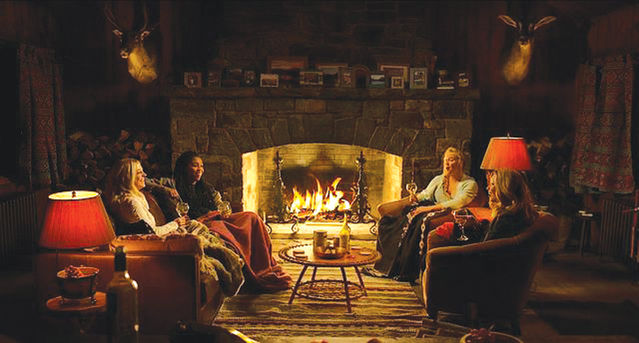
DSM-five Girlfriends sketch from Within Amy Schumer
In "DSM-5 Girlfriends," a sketch from the latest season of Inside Amy Schumer, a group of women gather to talk about recent relationships gone bad, each diagnosing her ex with increasingly pathological disorders, and then attacking the one woman who suggests they might be off base. Slinging personality disorders in casual conversation has never been more in faddy. Information technology wasn't e'er this way.
Narcissism was once a term used mostly in academic research and clinical diagnosis. And so, in 1979, researchers developed the Narcissistic Personality Alphabetize, cultural historian Christopher Lasch published The Civilization of Narcissism, and the term went mainstream. "In grad schoolhouse, we talked about our narcissism freely," psychologist Craig Malkin says. In 2006, with Jean Twenge's book, Generation Me, the idea that narcissism was on the ascent nationwide, and might exist rampant among the Millennial generation in particular, entered the public consciousness.
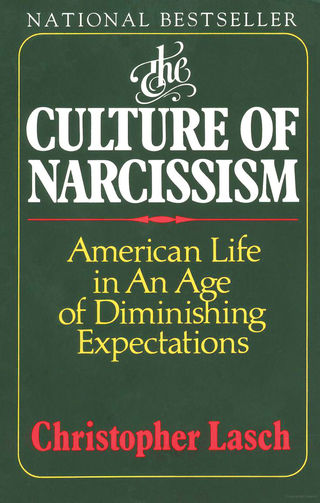
Now some researchers are debunking claims of mass narcissism, expressing concern that a characterization meant to refer to a serious clinical disorder is being wielded after every breakdown, family dispute, or selfie encounter. "We might throw effectually the term besides much when someone is just a little chip of a testify-off or ends up in charge," psychological researcher Seth Rosenthal says. Such individuals may have personality traits that seem similar to narcissism, but "to really authorize every bit a narcissist, they accept to have sure other motivations and behaviors."
Most apropos for some experts is the thought of a cultural rejection of good for you expressions of confidence or self-esteem. "Cocky-esteem is salubrious," psychologist David Ludden says. "Narcissism is something unlike."
Submit your response to this story to letters@psychologytoday.com. If y'all would like us to consider your letter for publication, delight include your name, metropolis, and state. Letters may exist edited for length and clarity.
For more stories similar this one, subscribe to Psychology Today, where this piece originally appeared.
Facebook epitome: conrado/Shutterstock
Source: https://www.psychologytoday.com/us/articles/201609/meet-the-real-narcissists-theyre-not-what-you-think
Posted by: saulternowbod1994.blogspot.com
0 Response to "Insufferable corporate narcissism has reached new heights"
Post a Comment